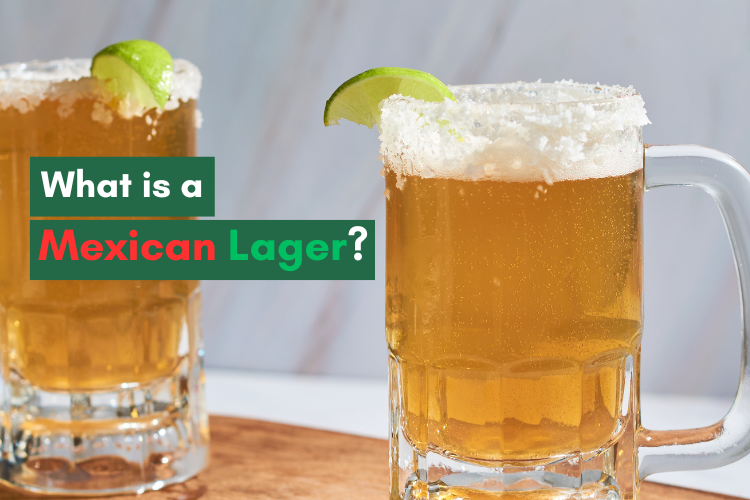
Lime wedges, beaches, maybe a splash of tomato juice and tajin for a michelada; there’s really no bad way to enjoy a Mexican lager. Most beer drinkers enjoy a Mexican lager pretty frequently, while others might know them best for their ubiquity in commercials during football.
However, there’s a pretty clear difference between Negra Modelo and Corona Light, even though they’re both Mexican lagers. So, let’s explore what exactly a Mexican lager is, what it tastes like, and how to spot a Mexican lager vs other types of lager.
Where Do Mexican Lagers Come From?
Mexican lagers obviously come from Mexico, but the origin of the style can be traced back to Central Europe.
Back in the 1860s, the then-popular Vienna lager was brought over the Atlantic Ocean by Austrian Emperor Maximilian I, who was put in charge of Mexico. But a Vienna lager requires Vienna malts, Noble German hops…basically a bunch of ingredients that are natural to Europe, but not Mexico.
Over the decades, Mexican brewers took the Vienna lager style and tweaked it to lean more heavily on local ingredients and flavor preferences. A large part of this meant introducing corn as an adjunct, which helps give Mexican lagers their lighter and sweeter flavor.
Mexican Lager vs Vienna Lager: Main Differences
While Mexican lagers originated from the Vienna lager style, the two are pretty distinct nowadays:
| Mexican Lager | Vienna Lager | |
|---|---|---|
| Origin | Mexico, mid-1800s (via Austrian/German immigrants) | Vienna, Austria, 1840s |
| Color | Pale gold to light amber | Amber to reddish-copper |
| Malt character | Light, clean, often with corn or rice adjuncts | Toasty, bready, Vienna malt-forward |
| Hop presence | Minimal — very low bitterness | Low to moderate, noble hop varieties |
| Body | Light and crisp | Medium, slightly fuller |
| ABV range | ~4–5% | ~4.5–5.5% |
| Finish | Dry, clean, highly refreshing | Slightly sweet, smooth malt finish |
| Vibe | Patio, lime wedge, hot weather crusher | Pub session, malt-lover’s easy drinker |
What Does a Mexican Lager Taste Like?
The Mexican lager is among the lightest lagers you can find, thanks in part to corn and rice added to the standard malt. While there’s a range of variety with this style (I’ll get to that in a moment), you can generally expect a few things when enjoying a Mexican lager.
Mexican lagers tend to be pale to amber in color, and incredibly light and crisp, making them perfect for hot weather and sunshine. Flavors in a Mexican lager are sweet, a result of the malt-forward lager brewing and adjuncts like rice and corn. Because the style leans heavily on malt flavor, don’t expect anything hoppy or bitter as you might get with a pale ale.
Don’t expect anything super boozy with a Mexican lager, either; you’ll rarely find one pushing past 5% ABV. These are beers designed to complement good food, good weather, and good times, so it’s ok if you have more than one.
Why Are Mexican Lagers So Different?
Going back to my Negra Modelo and Corona Light point, why is there so much variety within the Mexican lager style? Well, there really isn’t, because Negra Modelo and Corona Light aren’t Mexican lagers.
Negra Modelo, with its dark color, strong malt flavor, and fuller body, drinks a lot more like a traditional Vienna lager than a Mexican lager. It’s kind of a nice callback to the origin of the Mexican lager, but it’s not representative of the style itself.
Corona Light takes a Mexican lager style and strips it down to the bare minimum to cut back on ABV and calories. While a Mexican lager has a nice, sweet flavor, Corona Light has almost no flavor. The brewers know that you’ll be adding a lime anyway, so they aren’t concerned about the taste.
Technically, you could argue that these are both Mexican lagers since they’re produced in Mexico, but they aren’t good representations of the classic Mexican lager style we enjoy.
Best Mexican Lagers to Try
I’ve already covered what I think are the best Mexican lagers you can buy, so I won’t dwell on this too long. In general, I recommend drinking Mexican lagers with good flavor, like Pacifico or Modelo Especial, or giving your local craft brewery’s Mexican lager a try.
The Future of Mexican Lagers
This might be controversial, but my least favorite trend in craft brewing right now is beer that has salt and lime flavor added to the final product (think Stone Brewing’s Buenaveza). Yes, there are decent examples, and they can taste good in the right situations. But forcing the salt and lime flavor doesn’t give the beer drinker (me) a chance to taste the actual beer. It’s the same reason I rarely put a lime in my Mexican lager, which is also the main reason I don’t like Corona.
Honestly, we’re all absolutely spoiled with how many great Mexican lagers there are and how easy it is to find them.

- What Is Single Barrel Whiskey? - September 15, 2026
- Best Tasting Non-Alcoholic Beers For 2026 - September 8, 2026
- Mango Cart Review: The Best Alcoholic Mango Juice - September 8, 2026