When you think of an IPA, what comes to mind?
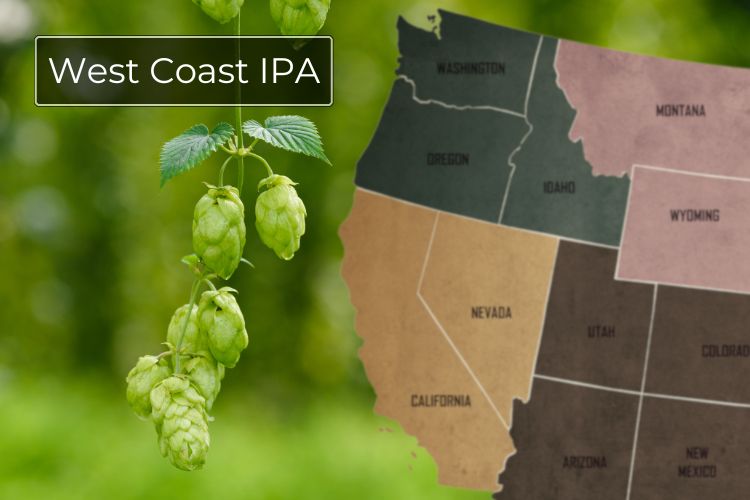
If you said bitter, hoppy, and boozy, then the West Coast IPA has made an impression on you. After all, West Coast IPAs are what helped make craft breweries as popular as they are today.
West Coast IPAs are known for being, well, bitter. They’re also known for being incredibly hoppy, though you shouldn’t mistake hoppy and bitter to mean the same thing. Lastly, West Coast IPAs are nice and boozy, usually somewhere in the 6.5-7.5% ABV range.
The West Coast IPA is known for its intense bitterness, strong hop character, and clean finish. While WC IPA has had its ups and downs in terms of popularity, it’s still one of the most recognizable styles in the beer world.
Let’s dig into what makes West Coast IPAs so special.
A Brief History of the West Coast IPA
The West Coast IPA was born out of equal parts curiosity and boredom with the status quo of beer. Craft brewers in the 1990s and early 2000s were trying to find a way to break out of the mundane lager-focused brewing operatus mundi. Lagers are great, but brewers were looking for a little more variety. So, they went back to old IPA styles that hadn’t been popular in years and started to experiment.
At the same time, hop growers up in Yakima Valley were creating and cultivating hops that were piney, citrusy, and bold. These hops, like Cascade and Simcoe, added tons of bitter flavor and hop aroma that beer drinkers weren’t familiar with. Naturally, experimental brewers were enamored with these hops.
The result of experimental hops and experimental brewing was the West Coast IPA, a hop-forward, bitter ale that tasted like nothing before. The style originated on the West Coast but quickly spread across the country.
How Is a West Coast IPA Made?
One of the beauties of any type of IPA is that there is no set-in-stone rule on how to brew the style. However, to get a traditional WC IPA, most brewers follow similar steps to reach a specific output.
West Coast IPAs are usually brewed with less malt than other styles, letting the hops take center stage. Most WC IPAs use hops like Cascade, Simcoe, and Citra, adding them during the boil to extract bitterness and again during dry hopping for aroma.
The fermentation process uses clean-fermenting ale yeasts that don’t add a ton of flavor since the goal is to focus on the hops. After fermentation, most IPAs are filtered to give them that signature clean, clear look, though some brewers may choose to leave them unfiltered.
The end result is a beer with assertive hop flavor, a dry finish, and a crisp, clean mouthfeel.
Are West Coast IPAs and Hazy IPAs the Same?
No, the WC IPA and Hazy IPA are two distinct styles, though they’re both popular IPA styles.
The biggest differences are bitterness, clarity, and mouthfeel. West Coast IPAs are clear, dry, and bitter. Hazy IPAs are pretty much the opposite: hazy, softer, juicier, and far less bitter. The hop character in a West Coast IPA leans piney and resinous, while it leans tropical and fruity in a Hazy.
They’re both hop-forward, so it’s fair to say that they’re both pretty hoppy, but the actual style is quite different.
West Coast IPA Flavor
You probably know by now that the defining character of the West Coast IPA is its bitterness, and that bitterness is balanced by aromatic hop flavor instead of malty or hoppy sweetness. Here’s what you should experience from a WC IPA:
Flavors you should get:
- Piney, resinous bitterness
- Lighter citrus notes (grapefruit, orange peel, lemon zest)
- Floral and herbal aromas
- Dry, clean finish
- Light to moderate malt backbone
Flavors you should NOT get:
- Juicy, tropical sweetness (this is more East Coast IPA)
- Heavy maltiness or sweetness
- Hazy or murky appearance (with some exceptions)
- Overly sour or funky character
West Coast IPAs typically land in the 6.5–7.5% ABV range, with IBUs often between 50–80, making it pretty bitter compared to most other beer styles.
What’s a Good West Coast IPA?
If you’re asking me, maybe the best example of a West Coast IPA is Pliny the Elder from Russian River Brewing in Santa Rosa, California. It’s widely considered to be the gold standard of the style (even though it’s technically a Double IPA).
Here are some other notable West Coast IPAs worth trying that should be available in most of the country:
- Space Dust IPA from Elysian Brewing
- Sculpin IPA from Ballast Point Brewing
- Torpedo Extra IPA — Sierra Nevada Brewing
You should be able to find a pretty solid WC IPA at a local craft brewery, too.
Are West Coast IPAs Making a Comeback?
For a while there, it seemed like the West Coast IPA had been edged out by the Hazy IPA wave. Bitter beer was practically a meme, and for a few years, cloudy, juicy beers dominated tap lists everywhere.
Thankfully, most craft beer crazes return to Earth after time, and when the dust settles, we’re left with the best of the best. This means more WC IPA presence in taprooms, and I’m all for it.
Plenty of craft breweries never abandoned the style, and today you’ll find West Coast IPAs earning renewed respect from beer drinkers young and old. The clean, dry, bitter character that once felt overwhelming now feels refreshing in a market saturated with soft, sweet beers.
The West Coast IPA isn’t making a comeback so much as it never really left. It just wasn’t the star of the stage for a while.

- 13 Best Light Beers, Ranked - October 7, 2026
- What Is Skunked Beer? (And How to Prevent It) - October 1, 2026
- Best Mexican Beers (That Aren’t Corona) - September 29, 2026