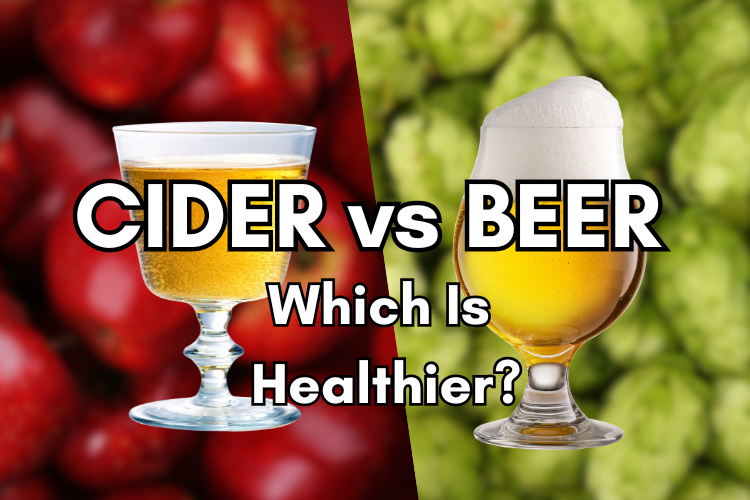
Just so nobody is confused, cider and beer are not health foods. However, if you’re looking to make a healthier decision around drinking, then it’s worth knowing whether beer or hard cider is the better option.
Beer and cider both have their benefits (or rather, drawbacks). Also, there’s so much variety with beer and cider that it’s hard to make an apples to apples comparison. Even picking a low calorie beer is way healthier than DIPA. So, I’ll compare cider and beer to help you decide which is the healthier option for you, whether that be cutting calories, avoiding gluten, or trying to cut back on sugar.
What Beer and Cider Are Actually Made From
Despite hard cider often being sold as an alternative to beer, the two drinks don’t have too much in common. Knowing what both drinks are made of can help you figure out which is the best choice for you.
What Is Beer Made From?
Beer is made from five main ingredients: water, malted grain, hops, yeast, adjuncts (which is anything else added to beer). Hops add flavor and aroma, ranging from bitter to juicy, and are what make ales stand out. The malted grains, usually barley but sometimes wheat or rice, provides the sugar that ferments into alcohol. These malted grains are why most beers contain gluten.
During most beer brewing, the majority of the sugars from the grain get eaten by the yeast and turned into alcohol. The lack of remaining sugars is why beer is rarely sweet. On the flip side, what’s leftover are complex carbohydrates, which are the unhealthy type of carbs.
What Is Cider Made From?
Hard cider is generally made from fermenting apples. Some cideries might add other fruits to the mix, like pear or passion fruit, but apples tend to serve as the main foundation of cider. The natural sugars found in apples are fermented by yeast, and the result is alcohol. Depending on how much sugar is leftover, you’ll end up with one of two main types of cider:
- Dry cider, which is crisp, tart, usually higher in alcohol, and lower in sugars
- Sweet cider, caused by halting fermentation earlier or adding sugars, which is sweet, albeit with more sugar, calories, and carbs.
Because cider is fruit-based and not grain-based, it’s naturally gluten-free.
Beer vs Cider: Calories, Carbs, and Sugar
As I alluded to earlier, it’s hard to directly compare beer and cider, since there are different types of beer and cider. But to try and help you break down the health benefits (or lack thereof) of each option, here’s a nice comparison with different options included:
| Calories (12 oz) | Carbs (g) | Sugar (g) | ABV | Gluten | |
|---|---|---|---|---|---|
| Light Beer | 90–110 | 3–6 | 0–1 | 3.5–4.5% | Yes |
| Standard Beer | 140–170 | 10–15 | 0–2 | 4.5–5.5% | Yes |
| Craft/IPA | 180–250+ | 15–25 | 0–3 | 6–8%+ | Yes |
| Dry Cider | 120–150 | 5–10 | 0–4 | 5–7% | No |
| Semi-Sweet Cider | 150–180 | 12–18 | 8–15 | 4.5–6% | No |
| Sweet Cider | 180–220 | 20–30 | 16–25 | 4–5.5% | No |
Keep in mind that these aren’t set-in-stone calories, carbs, etc for each option, but a general range to help you make healthier choices.
Unsurprisingly, light beer is generally the healthiest option, so long as you aren’t avoiding gluten. Dry cider is a slightly healthier choice than your standard lager or ale, followed by semi-sweet ciders. And, thanks to high levels of carbs and sugars, craft beer and sweet ciders are handily the most unhealthy options.
So, with that context, cider isn’t healthier than Michelob Ultra, but a dry cider is definitely a healthier pick than Pliny the Elder.
Beer, Cider, and Gluten
It’s worth highlighting gluten, especially when it comes to beer. Most beer is brewed with barley or wheat, so the final product will have gluten. However, there are gluten-free and gluten-reduced beers available, and they’re usually brewed with grains like rice or millet. While gluten-free beer has come a long way, there is a noticeable flavor difference between gluten-free beer and standard craft beer.
Cider is naturally gluten free, and I’m not sure how a cidery would even go about adding gluten (or why they would). If you have celiac disease, gluten sensitivity, or just want to avoid gluten, cider is likely the healthier choice.
Cider vs Beer: Which Should You Drink?
If you’re still reading this article, then you know the answer is “it depends.” Here’s an easy way for you to pick the “healthier” option:
- Choose beer if you want fewer sugars, the lowest-calorie option (light beer), and more variety.
- Choose cider if you need to avoid gluten, prefer fruit flavors, or enjoy low-sugar dry ciders.
Regardless of which you choose, drinking too many at once is definitely an unhealthy decision to make.
FAQ: Beer vs Cider Health
Whether beer or cider is more fattening depends on the style you choose. For example, sweet commercial ciders like Angry Orchard have over 20 grams of sugar and 200 calories per serving, making them unhealthier than many types of beers. But a dry cider has fewer calories than a standard IPA.
Cider can be stronger than beer, but beer can be stronger than cider. Dry ciders tend to skew higher in ABV (usually 5-7%) while sweet ciders are closer to 4-6% ABV. Craft beers easily push 7-8% ABV and higher, though light beers rarely go above 5%.
Cider usually has more sugar than beer, especially if you’re drinking a sweet or semi-sweet cider. Dry ciders can be nearly free of sugars, though no options are completely sugar-free.
Yes, cider is naturally gluten-free because it’s made from fermented apples and not grains. Double check labels to guarantee it’s gluten-free, since some larger cideries can cross contaminate and introduce trace levels of gluten into the final product.

- What Is Skunked Beer? (And How to Prevent It) - October 1, 2026
- Best Mexican Beers (That Aren’t Corona) - September 29, 2026
- 8 Best Beers for People Who Hate Beer - September 19, 2026