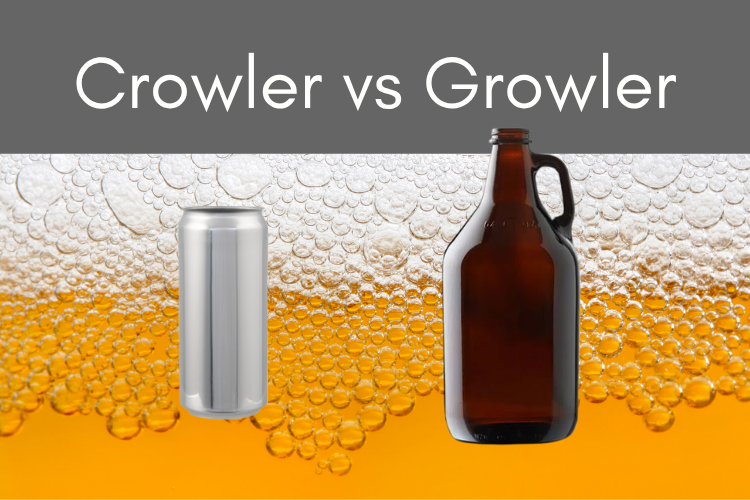
Some brewery menus offer their beers in pours of 16oz (a pint), but also 32oz or 64oz. These larger options are for crowlers and growlers. A crowler a 32oz aluminum can that’s filled and sealed at the bar. A growler is a 32oz or 64oz reusable container, usually made of glass or stainless steel. Both are great options for taking beer home, but they come with distinct advantages and disadvantages depending on what your plans are.
What Is a Crowler?
A crowler is basically a giant can of beer. When you order a crowler, the bartender takes an empty 32oz can of beer, purges the oxygen, and fills it straight from the tap. Next, they seal it with a tabletop machine, and now you have a giant beer that’s ready to go! Ordering crowlers is pretty quick, and the beer is ready to drink immediately.
What Is a Growler?
A growler is basically a giant beer jug, with most growlers holding 64oz of beer (though smaller 32oz are available). You can find glass and stainless steel growlers, but I would recommend using a stainless steel container to block out light and help keep the beer fresher for longer.
Unlike crowlers, growlers are reusable, so once you’re done with your beer, you can bring it back into your favorite brewery for a refill. Most breweries will clean your growler for you, too.
Crowler vs Growler: Quick Comparison
| Crowler | Growler | |
|---|---|---|
| Sizes available | 32oz | 32oz or 64oz |
| Freshness once sealed | Weeks, if properly stored | A few days |
| Freshness once opened | Best finished same day | Can be recapped to last another day or two |
| Reusability | Single-use, but recyclable | Reusable |
| Cost per fill | Flat price for each fill | Pay for the growler once, then pay for the beer |
| Where you can take it | Beaches, parks, trails, most places glass is banned (but alcohol is permitted) | Pretty much just your home or a friend’s home |
Freshness & Shelf Life
After Getting Sealed
Crowlers keep beer fresher for longer than growlers. The crowler canning process removes oxygen, which slows the degradation of the beer. Also, crowlers are aluminum cans, so all light is blocked, which prevents skunking. A growler, even when well-sealed, starts losing its carbonation and flavor after just a few days. In my experience, stainless steel growlers kept in the fridge tend to keep beer freshest, but the best time to enjoy a growler is the same day it’s filled.
After Getting Opened
As with a 12oz can of beer, opening a crowler means that the beer will be enjoyed best within a few hours. There’s really no good way to reseal a crowler, so plan on finishing the entire thing in one sitting. A growler can be resealed, whether that be with a swing-top or screw cap, and you can put it back in the fridge and enjoy it again later. However, you’ll still want to finish the growler within the next few days.
Taste
If you’re looking for the best beer flavor, I find that crowlers are the best option. Crowlers capture that fresh-out-the-tap flavor way better than growlers do, and they last longer in the fridge (assuming you haven’t opened the can). However, the difference in flavor between a fresh crowler and growler is really subtle, and you might not notice a smaller difference with stouts than you would with IPAs.
Value and Cost Per Fill
In terms of value, growlers are consistently a better deal. Breweries tend to lower the cost per volume as you order more volume. For example, a half pour might cost $5 while a full pour costs $8. It’s half the beer, but not half the price.
Filling a growler will consistently come with a better value on the beer. Of course, there are a few caveats to note:
- You have to buy the growler (either at the brewery or ahead of time)
- You need to commit to the growler’s size of beer, which is usually 64oz
- You need to stick with 64oz of one type of beer, whereas you could get two different 32oz beers with crowlers
So, if you frequent the same brewery and enjoy getting four pints of the same beer, getting and using a growler is no-brainer.
Practicality and Where You Can Bring Them
It’s no surprise that most public places don’t allow alcohol, but the few that do rarely allow glass containers. So, crowlers are more practical in this sense. Also, crowlers are smaller than growlers, meaning they’re easier to bring places.
Of course, you’ll probably be bringing the crowler or growler to your home or a friend’s home, in which case they’re both equally practical.
Sustainability
Reusing is more sustainable than recycling, so growlers are a more sustainable option than crowlers.
When to Choose a Crowler vs a Growler
If you need help picking between a growler and crowler, here’s how I approach it:
Choose a Crowler If…
- You’re headed somewhere glass isn’t allowed
- You’re shipping or gifting beer to someone else
- You’re drinking solo or finishing it same day
- You want the beer but didn’t bring a growler
Choose a Growler If…
- You’re splitting a beer over multiple sittings
- You love the value of slightly cheaper beer
- You want the more sustainable option and know you’ll reuse it
- You already have one
Crowler vs Growler FAQ
When properly sealed, beer stays fresh in a grolwer for a few days. Light exposure and oxidation will start to noticeably affect taste and carbonation after that.
Assuming the beach or park allows outside alcohol, yes you can bring a crowler since it’s aluminum and easily recyclable.
In terms of value, growlers are most cost-effective than crowlers, though crowlers cost less since they’re a small volume of beer.
I would not recommend shipping a growler. Even if it somehow stays sealed and doesn’t leak, the beer will be well past its prime once it arrives at its destination. Crowlers are better for shipping.
I find that crowlers have fresher tasting beer than growlers, especially with more hop-forward beers.

- What Is Skunked Beer? (And How to Prevent It) - October 1, 2026
- Best Mexican Beers (That Aren’t Corona) - September 29, 2026
- 8 Best Beers for People Who Hate Beer - September 19, 2026