Craft beer trends ebb and flow, with breweries trying popular styles just to see what sticks. In recent years, these trends have given rise to rice lagers, American light beers, and the Cold IPA. Another beer trend that’s been gaining steam is the Italian pilsner.
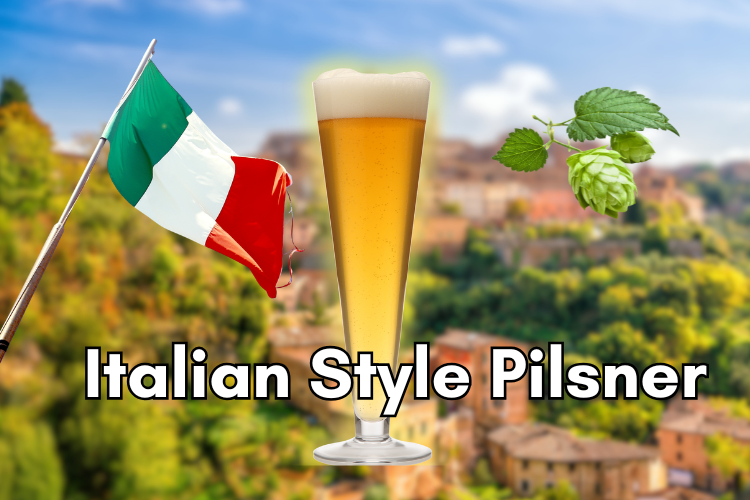
An Italian pilsner is a dry-hopped German-style pilsner that gets added flavor and aroma from European Noble hops. It’s the same crispy pilsner you’d expect, but with a little more hop expression.
How Italy Reinvented the German Pils
The modern Italian pilsner was created in 1996 by Agostino Arioli of Birrificio Italiano in Como. Arioli wanted to create a proper northern German pilsner, and the result was Tipopils, the first Italian pilsner.
Tipopils, and by extension the Italian pilsner, differ from a more traditional pilsner in a few ways. For starters, it’s brewed in just 4-5 weeks (pretty quick for a pilsner) and is unfiltered, giving it less of a malty backbone and more hop character. Tipopils was (and still is) a hit, and the style spread across Italy over the coming years. American craft brewers began adopting the same techniques in the 2010s, notably when Firestone Walker brewed the Pivo Pils in 2013. Pivo Pils paved the way in the USA, and craft brewers have been concocting Italian pilsners ever since.
What Makes an Italian Pilsner Different?
The main thing that sets the Italian pilsner apart from other beers is the dry-hopping with Noble hops. Unlike aggressive dry-hopping that you’d find in American IPAs, the Noble hops add just enough to balance with the malt in the pilsner. Noble hops add an herbal and grassy flavor, as opposed to hops like Citra or Simcoe, which have citrus and tropical flavors. Other hops that are used in Italian pilsners include Saphir, Perle, and Hallertau Mittelfruh.
All this to say that the result is a stronger aroma than a standard pilsner while still being crisp and crushable.
Italian Pilsner vs German Pilsner
An Italian pilsner starts the same way a German pilsner does: light malt backbone, clean fermentation, and dry finish. The Noble hop dry-hopping is what makes the Italian pilsner unique. The best way to tell the difference is by trying the two side-by-side. A German pilsner will be bready, while an Italian pilsner will have a more herbal aroma and taste. Both are fantastic styles, so I don’t think that one is inherently better than the other.
Italian Pilsner vs American-Style Hopped Pilsners
Italian pilsners and American hopped pilsners both use dry-hopping to boost the flavor and aroma of the beer, but the hops used create very different final products. While Italian pilsners are herbal, American hopped pilsners use the same hops as IPAs, which pushes citrus, pine, and tropical flavors. The problem with this type of American-style hopped pilsner is that it almost becomes indistinguishable from an ale, which I think defeats the purpose of brewing a pilsner entirely.
Five Italian Pilsners Worth Trying
If you want to know what an Italian pilsner done right tastes like, here are a few examples that I think hit the nail on the head:
- Tipopils (Birrificio Italiano): I have to mention the OG Italian pils, even if it’s really difficult to find in the United States. But if you’re heading to Italy any time soon, make sure to find this beer.
- Pivo Pils (Firestone Walker): An early example of an American-brewed Italian pilsner, Pivo Pils remains one of my favorite Firestone Walker beers. It’s crisp, has just the right amount of hop flavor, and is widely available.
- Terrifica (Wayfinder): Wayfinder is one of my favorite breweries in Portland, and the Terrifica is just another great beer in their offerings.
- Che Fico (Stoup): The Italian pilsner that started my obsession, Stoup’s Che Fico is the perfect pairing for a sunny day in Seattle.
- Italian-Style Pilsner (AleSmith): AleSmith’s Italian-Style Pilsner (great name) is my favorite go-to Italian pils here in San Diego.

- What Is Single Barrel Whiskey? - September 15, 2026
- Best Tasting Non-Alcoholic Beers For 2026 - September 8, 2026
- Mango Cart Review: The Best Alcoholic Mango Juice - September 8, 2026