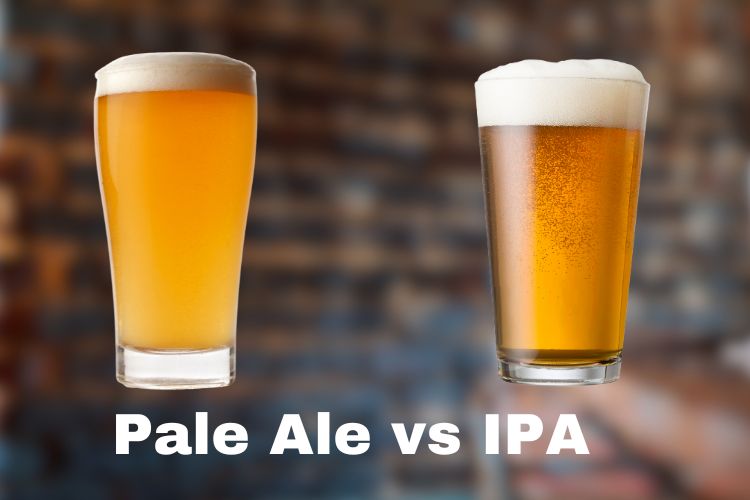
It’s fair to feel confused about the difference between a pale ale and an IPA. When you look at a brewery menu, the two can seem almost indiscernible, from the types of hops used to the IBUs. I’m not just saying that alcohol needs a label (though the government says it does), but being able to tell an IPA apart from a pale ale would be nice, especially when you’re at a new brewery and you have no idea what you might like.
So, let’s take a look at the differences between a pale ale and IPA, because there are a few factors that make these styles of brew unique from each other.
Is a Pale Ale the Same as an IPA?
No, a pale ale is not the same as an IPA. While an IPA is technically a type of pale ale, the two styles have a few clear differences, especially with how predominant the IPA has become in craft brewing.
The short answer is that pales ales are a lighter, more balanced, and lower ABV style, while IPAs lean more into hops to bring out juicier or more bitter flavors. Both IPAs and pale ales can be brewed using similar hops and malts, but the final products are different.
What is a Pale Ale?
A pale ale is an ale that’s…pale. Despite the name, pale ales are known for their amber-ish hue, though some more modern iterations of the brew can vary in color.
Pale ale is technically an umbrella term used to describe an array of ales, including:
- American Pale Ale (APA): Hoppy, crisp, and approachable. Many American Pale Ales are just called “pale ales” in breweries.
- English Pale Ale: More malt-forward and earthy, lower carbonation, often served on cask.
- Red Ale or Amber Ale: Technically in the pale ale family, though the color and malt character make them distinct.
- Belgian Pale Ale: Spicy and fruity from Belgian yeast, less hop-forward than American versions.
- IPA: Yes, technically. More on that below.
The best word to describe pale ales is “balance.” Pale ales tend to have some bitterness and hoppiness, just not as much as an IPA would. The real balance of bitter and hop depends on the types of hops the brewer uses; for example, a Citra hop pale ale will have a juicier flavor and be relatively low in bitter flavor.
Also, because a pale ale leans less on hops than an IPA, you’ll get more of the malt flavor coming through. Malts tend to have a sweeter flavor, which gives most pale ales a fantastic blend of tasting notes.
You can also tell a pale ale by its relatively medium ABV, usually somewhere in the 5-6% range. Pale ales tend to be bitter, but not IPA bitter, and hoppy, but not IPA hoppy.
What is an IPA?
The India Pale Ale, or IPA, is a dominant force in the craft brewing market. I’m not sure there’s a successful craft brewery open that doesn’t have at least two types of IPA on tap. The style is also incredibly divisive, because many people might assume that IPAs are always incredibly bitter.
As a technical subtype of the pale ale, the IPA takes everything the pale ale does and dials it up. Expect more alcohol, more bitterness, more juice, more body, more of pretty much everything.
There are also specific IPA substyles that wouldn’t be a pale ale, such as:
- West Coast IPA: The style that most people associate with an IPA. Dry, bitter, piney or citrusy, crystal clear.
- Hazy/New England IPA (NEIPA): Juicy, soft, and opaque. Huge tropical fruit aroma, lower bitterness than you’d expect given the hop load.
- Session IPA: Sub-5% ABV, tries to preserve IPA hop character in an easier-to-drink brew.
- Double IPA (DIPA/IIPA): 8%+ ABV, massive hop presence. Good when done well, bad when not.
- Triple IPA: Even more than a DIPA, if you can imagine (think upwards of 10% ABV).
- Cold IPA: Newer style, fermented cold like a lager but hopped like a West Coast IPA. Crisp, clean, and underrated.
IPAs lean heavily on hops when compared to other styles, including regular pale ales. Most IPAs skew away from malt flavors and embrace hop flavors, which can range from bitter and dank to juicy and sweet. Like with pale ales, the core flavor of an IPA depends on the hop mix.
As with any type or style of beer, the specific difference between a pale ale and IPA comes down to whatever the brewer decides to call it. However, I would find it disingenuous to call a 7% hazy beast a pale ale, or a 5.5% citra sipper an IPA.
Pale Ale vs IPA: Main Differences
Ok, now that we’ve explored each style a bit, here are the main differences that a casual beer drinker can use to discern the two styles:
Pale Ale
- 5-6% ABV
- Amber color
- Medium hops
IPA
- 6-7.5% ABV
- Pretty much any color
- High hops
When to Choose Each Style
If you’re struggling to choose between a pale ale and an IPA, I have a few opinions on when each works best.
Pale ales are best for:
- Warm weather and sun, so things like hanging out at the pool and baseball games
- Foods that would be overpowered by an IPA, like grilled fish, pasta, light cheeses, and so on
- An introduction to craft beer, since IPAs can be a little strong for new beer drinkers
- Any situation where you want a complement that improves the experience
IPAs are best for:
- Bold experiences that demand bold flavors
- Strong and fatty foods like burgers, fries, sharp cheddar, or hefty BBQ
- Any situation where you’re snacking on something salty; hops and salt are excellent complements
Pale Ale vs IPA: Which is Better?
Which wins in a fight between pale ale and IPA? Well, the IPA is certainly more popular since brewers will have 10 IPAs on the menu and maybe one pale ale.
However, the IPA is a type of pale ale, giving the pale an edge. But I think that IPAs have become so unique that they shouldn’t be classified as pale ales any longer. This is the day and age of the IPA, like it or not.
Personally, I like pale ales better. Thanks for reading!
FAQ: Pale Ale vs IPA
No, a pale ale is not an IPA, though an IPA is technically a type of pale ale. The main differences between the two are ABV, hoppiness, and balance of flavors.
IPAs almost always have more alcohol than pale ales. While brewers can do whatever they want, most IPAs will land around 6-7% ABV while pale ales come in closer to 4-5% ABV.
If you don’t drink much beer, want to drink something will balanced flavors, or just don’t want to drink a higher ABV beer, drink a pale ale. If you want something bold, flavorful, and a little stronger, go with an IPA.

- 13 Best Light Beers, Ranked - October 7, 2026
- What Is Skunked Beer? (And How to Prevent It) - October 1, 2026
- Best Mexican Beers (That Aren’t Corona) - September 29, 2026